Louis XVI Style Candlesticks PairGilt Metal Fluted Candle Holders, Chased Foliage — French, 19th Century Attribution
Delivered free · US duties paid · Insured
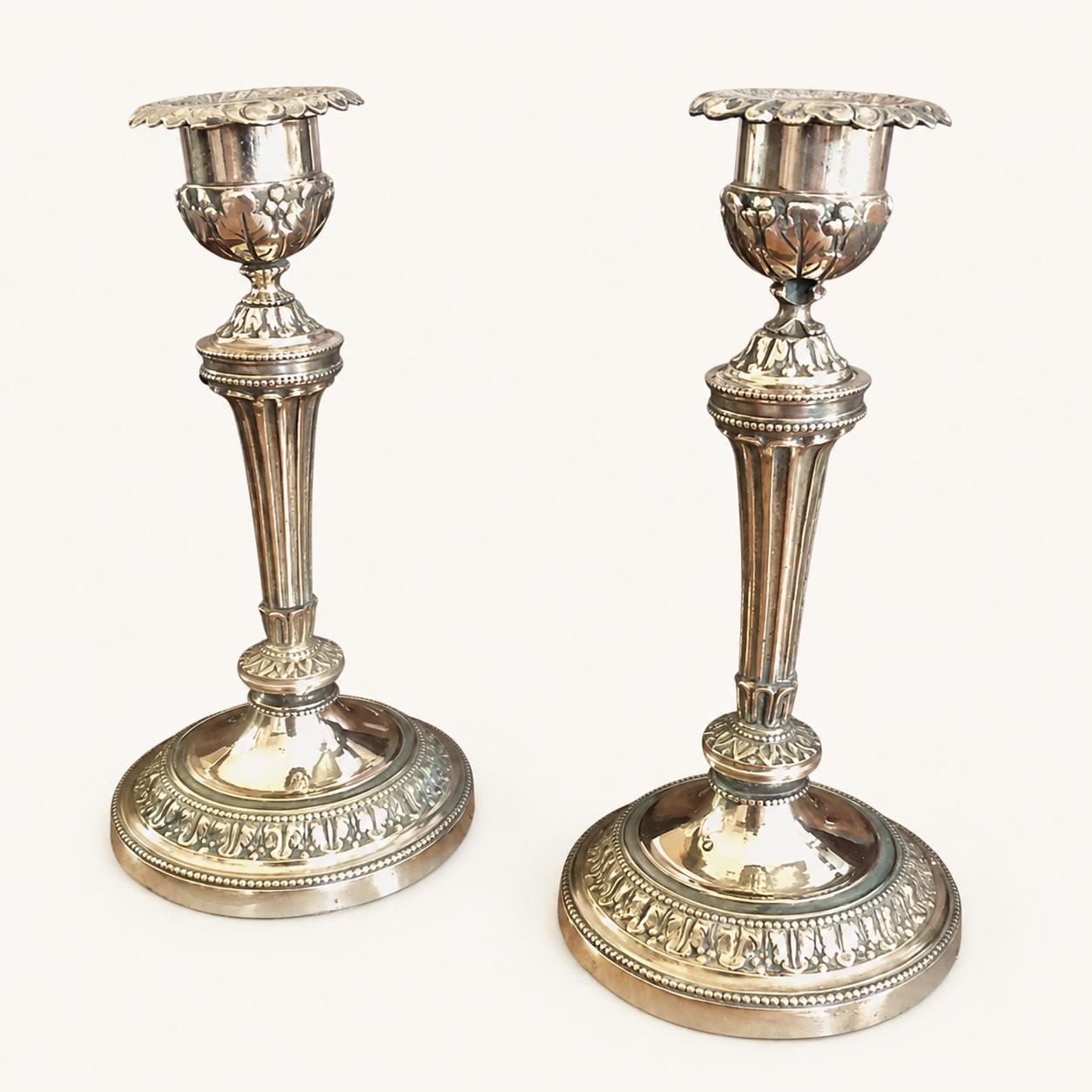
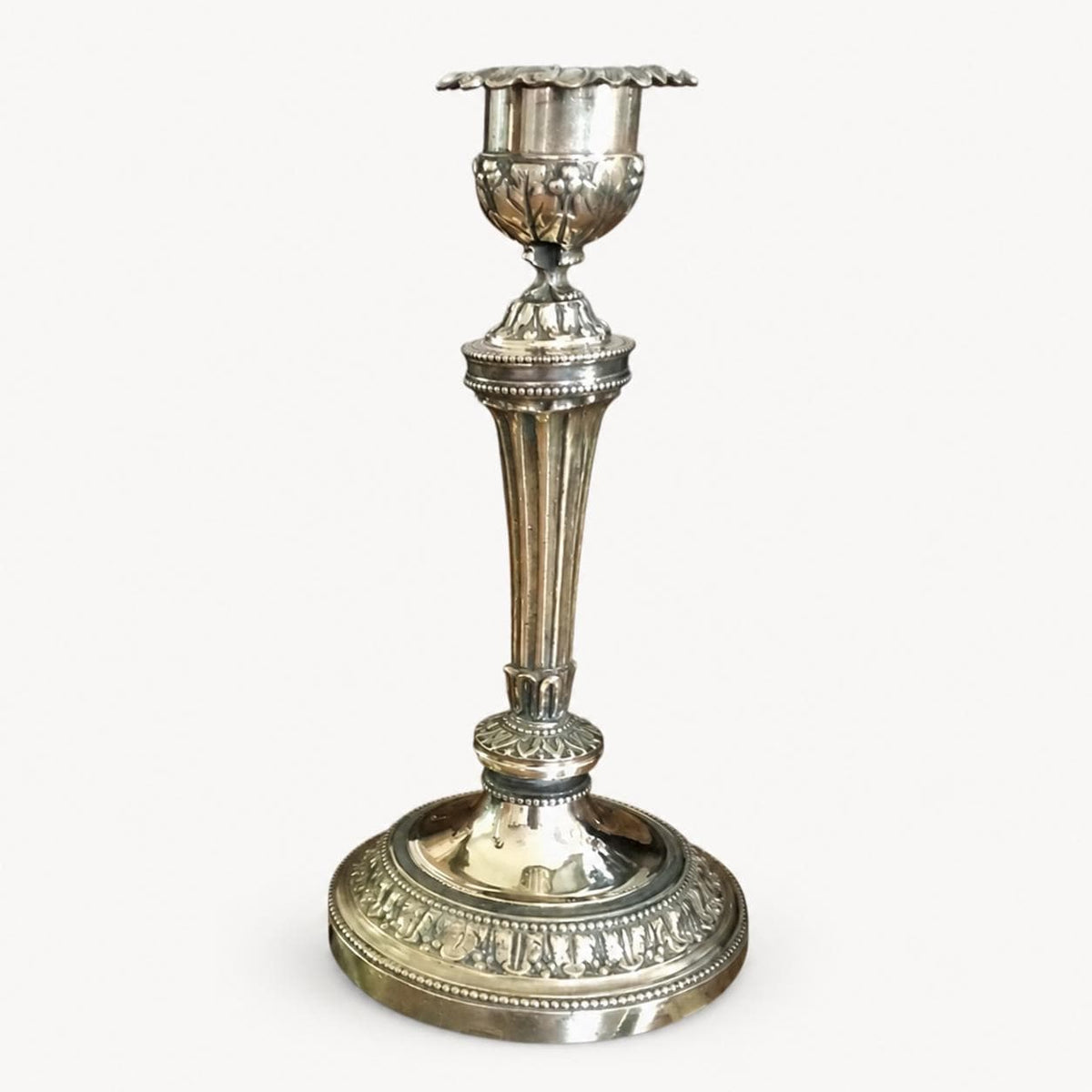
The Louis XVI candlestick is neoclassicism at dining height: a fluted column tapering downward like an inverted torch, dressed in the vocabulary of the style — acanthus, beading, laurel — and made in pairs, because candlelight in a French interior was always symmetrical. Pairs like this lit dinner tables and mantels for generations, which is why the good ones survive polished nearly white with handling.
One of one. When it’s gone, it’s gone.
Worldwide shipping and US import duties included.
Local duties may apply outside the US.
Prepared for you in 1–2 weeks. Most pieces ship within a week.
Estimated delivery:
Need it sooner? Express takes about 3 days once shipped. Ask Kiet
Thinking it over, or showing it to someone first? I will set Louis XVI Style Candlesticks Pair aside for you for 48 hours, free of charge.
Your hold request is in.
I will confirm it by email, usually the same day. Until then the piece is still on the site, so do not wait too long.
Not ready to decide? Leave your email and I will send you Louis XVI Style Candlesticks Pair with a few extra photos, usually the same day.
Thank you, it is on its way to you.
I will email you this piece, usually the same day. Kiet
- Free shippingTracked and fully insured
- US duties paidNothing to pay at delivery
- 30-day returnsNo reason needed
- 4.9 / 5 rating47 reviews on Etsy
Before you ask
Will I pay import duties or tariffs?
No. I pay the US import duties and tariffs, so there is nothing to pay on delivery.
What if it arrives damaged?
Every piece is packed individually and fully insured. Send me a photo of the piece and the box, and I handle the claim with the carrier and agree the solution with you.
What if it doesn't suit my room?
You have 30 days to return it, no reason needed. For a change of mind, you pay the return shipping. How returns work
Louis XVI Style Candlesticks Pair, Gilt Metal Fluted Candle Holders, Chased Foliage — French, 19th Century Attribution
- Origin
- France
- Period
- 19th Century
DETAILS:
Each: Height 19.5 cm (7.7 in) · Foot diameter 9 cm (3.5 in) — roughly the height of a coffee mug and saucer
Weight of pair: 938 g (2.1 lb)
Gilt metal, chased decoration; repolished · Sold as a pair
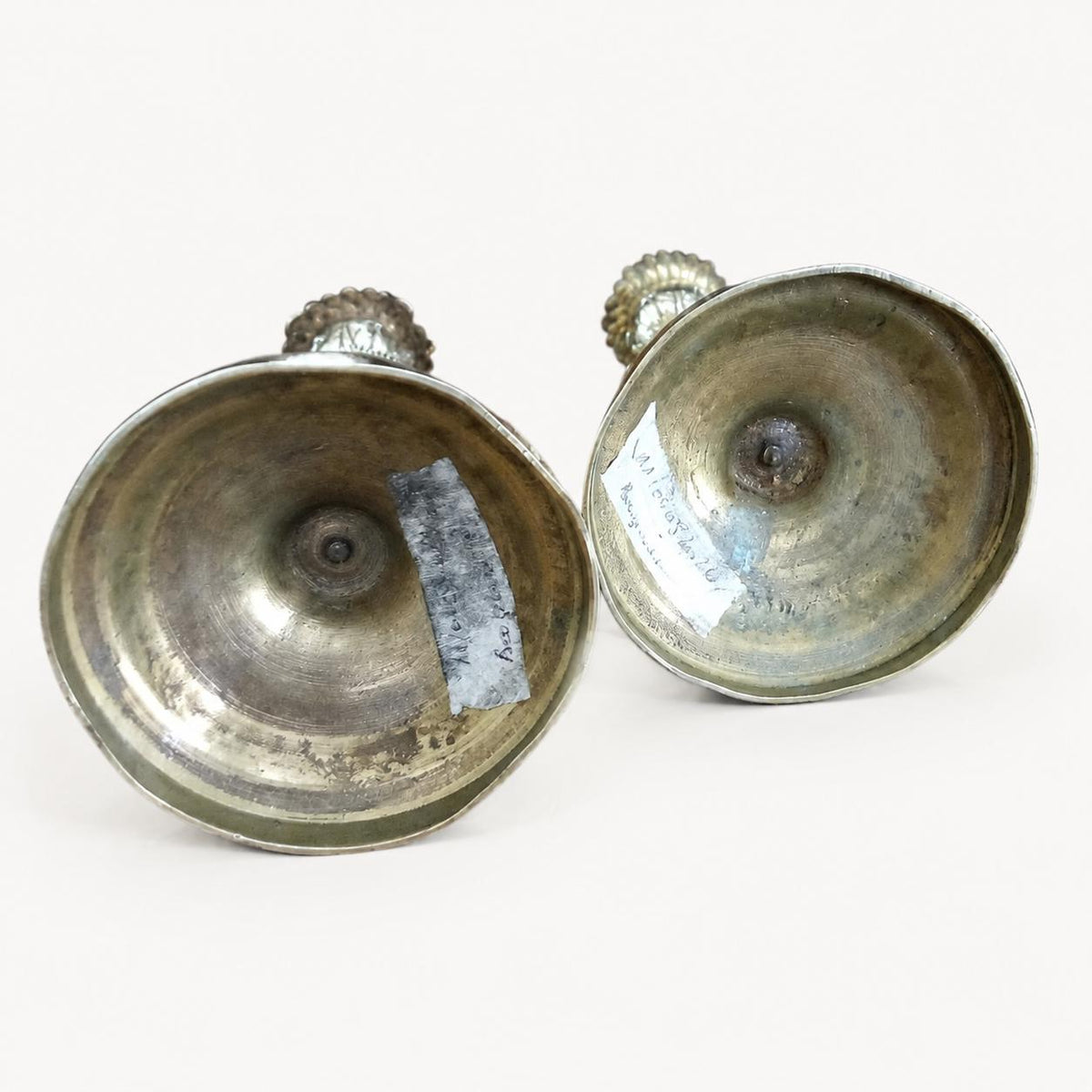
One candlestick pierced from a past lamp conversion; small deformations to one base edge
Condition: very good condition; bright even surface, small base deformations from old knocks (see photos)
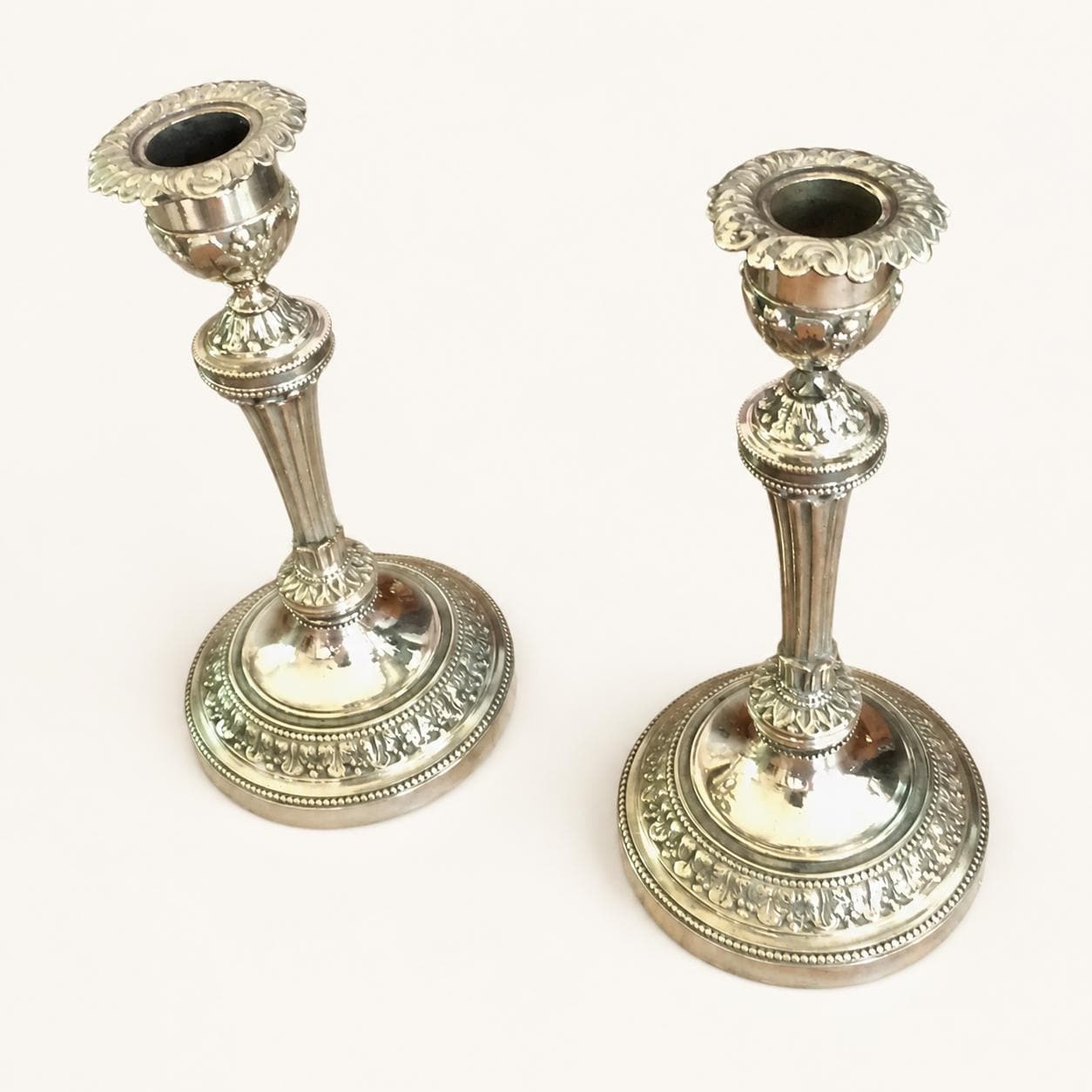
The Louis XVI candlestick is neoclassicism at dining height: a fluted column tapering downward like an inverted torch, dressed in the vocabulary of the style — acanthus, beading, laurel — and made in pairs, because candlelight in a French interior was always symmetrical. Pairs like this lit dinner tables and mantels for generations, which is why the good ones survive polished nearly white with handling.
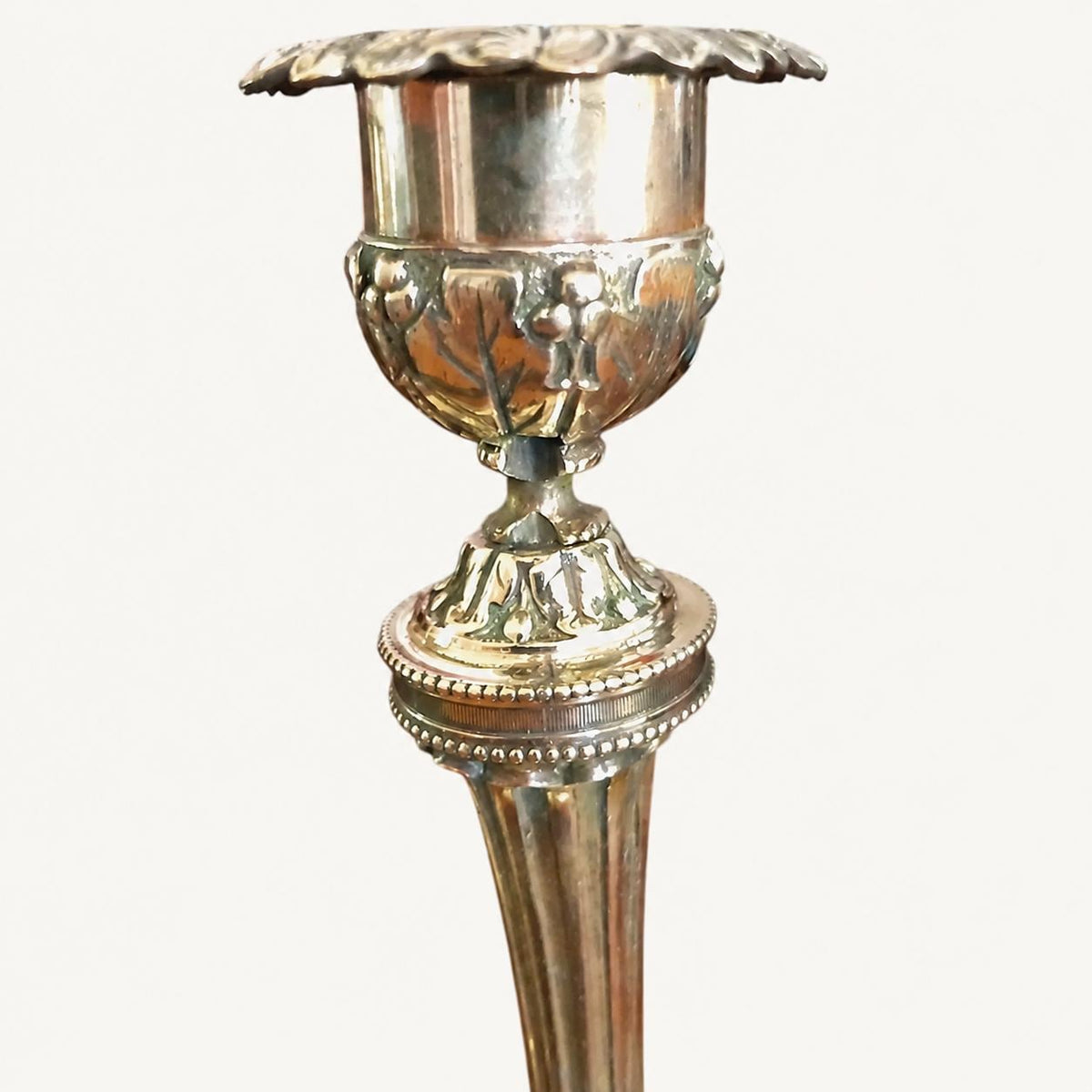
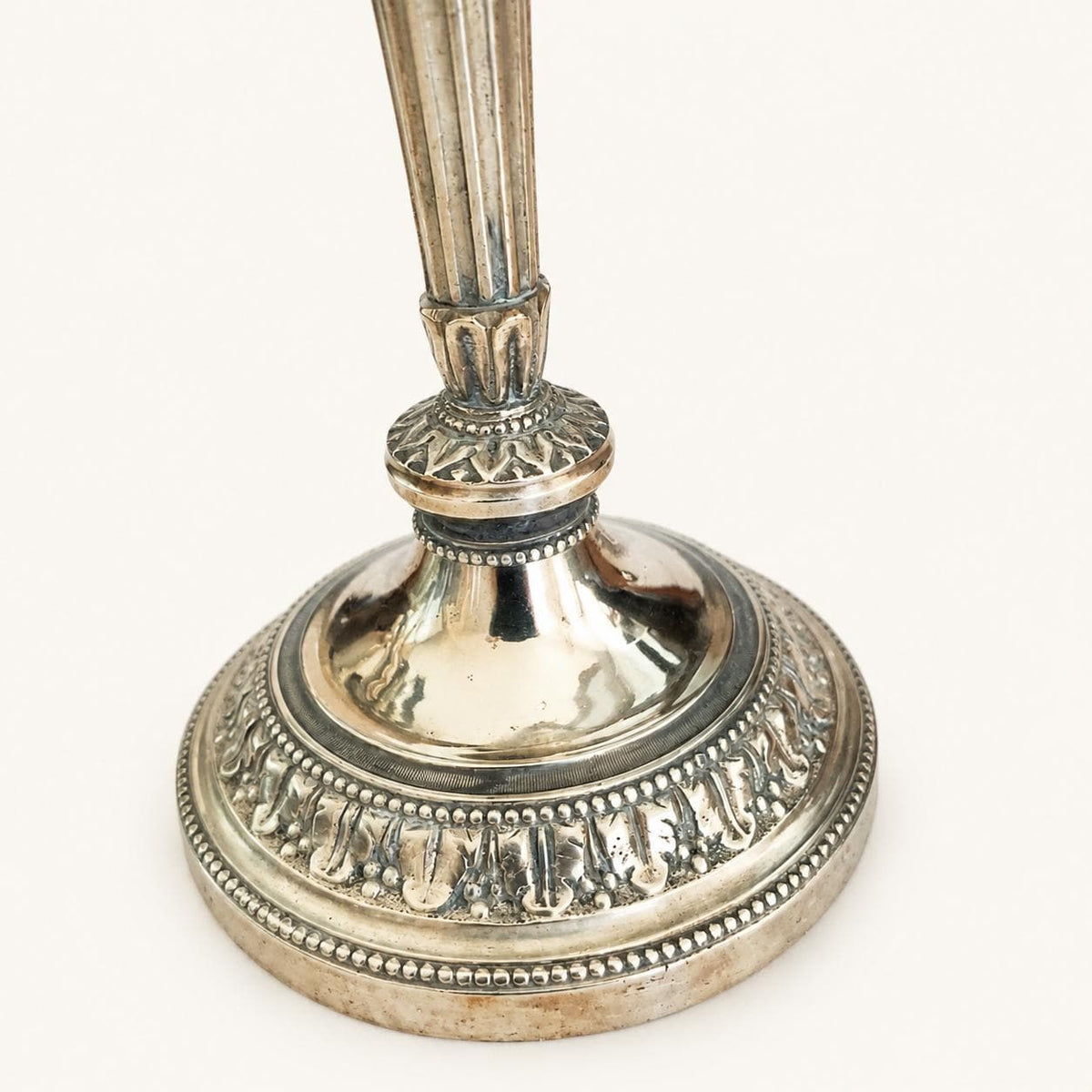
This pair is French, in the Louis XVI style, attributed to nineteenth-century work: each with an urn-form nozzle under a leafy drip pan, the socket chased with a band of flowers, a beaded knop above the tapering fluted column, and a domed circular foot rimmed with a running frieze of stiff leaves. Look closely at the chasing between the flutes and around the socket — the cutting is fine and deliberate, each leaf-edge picked out by hand after casting, the quality of finish that separates careful nineteenth-century work from the softer castings that came later. The pair has been repolished to a bright, even surface, and one candlestick is pierced through — the small hole made when it once served as a lamp, a common conversion honestly carried.
The brightness is even across both sticks, with small deformations to the edge of one base from old knocks, stated plainly and shown in the photographs. Whoever dined by this pair before you kept them polished and kept them together. They are ready for a dining table, a mantel, or a console.
The pair weighs nearly a kilogram in gilt metal, repolished and ready to use with standard candles. It arrives professionally packed and fully insured — worldwide shipping and US import duties are included. For other destinations, local import taxes and duties may apply and are payable by the recipient. Returns are accepted within 30 days.
Condition & electrical details
Condition
Read our condition standard. Please ask if you need additional photographs or measurements.
A decorative style is not a guarantee of a particular maker or date. See the individual listing for the stated attribution and period.
Shipping, insurance & tariffs
Worldwide delivery is included in the price. Every piece is individually packed, tracked and fully insured. No shipping charge is added at checkout. If your destination is not listed, please contact us before ordering.
Maison Jaspers pays US tariffs and import duties. For other destinations, local import taxes and duties may apply and are payable by the recipient. Contact us before ordering if you need destination-specific guidance.
Dispatch timing is shown above. Transit time depends on your destination.
Returns
Notify us within 30 days of delivery if you wish to return a piece. No reason is required. You pay return shipping for a change-of-mind return.
Choose options
Related pieces